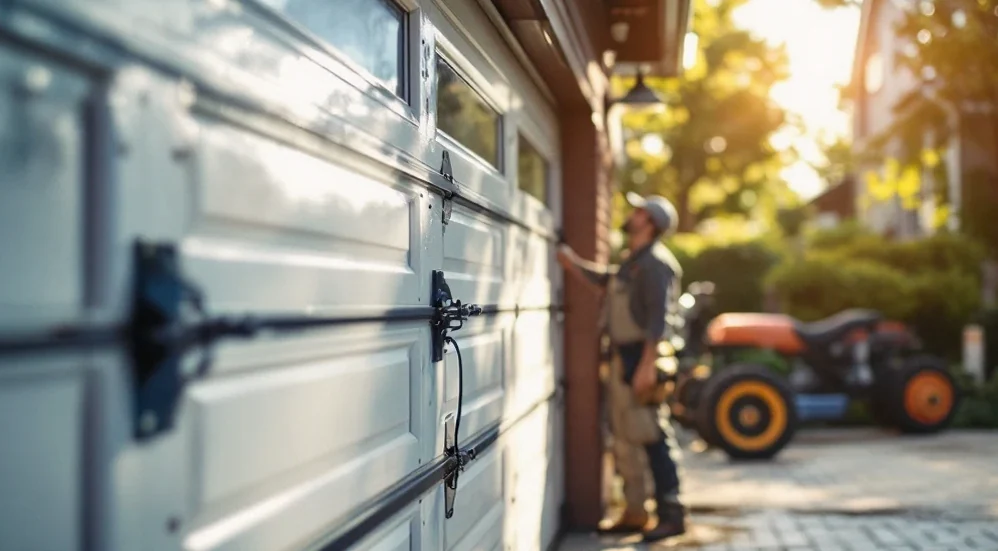
What is Commercial Garage Doors and how does it work?
A commercial garage door is a heavy-duty door designed for businesses, but many Mobile homeowners have them on workshops, detached garages, or rental properties. They use torsion springs, high-cycle rollers, and often industrial openers to handle daily use.
A commercial garage door isn't just a bigger version of your home's door. It's built to a different standard. The panels are thicker, often 24-gauge steel or heavier, and the springs are matched to a higher cycle count. Where a residential door might be rated for 10,000 cycles, a commercial door can handle 50,000 or more. That matters if you're opening and closing it a dozen times a day at a rental duplex or a home workshop.
The track system is also different. Commercial doors use a vertical-lift or high-lift track, not the standard curved track you see on a typical two-car garage. This design lets the door sit flat against the ceiling, giving you more headroom inside. In Mobile, where many older homes have low ceilings in converted garages, this can be a real advantage.
The opener on a commercial door is usually a jackshaft unit mounted on the wall beside the door, not a trolley on the ceiling. It turns a torsion shaft directly, which means it can lift heavier doors without the chain vibration you get with a residential opener. Some Mobile homeowners with extra-tall doors on boat storage or equipment sheds find this setup much more reliable.
Insulation is another difference. Commercial doors often come with a thermal break between the steel skins and polyurethane insulation. That's not just for climate control; it also stiffens the door and reduces noise. On a hot Mobile afternoon, an uninsulated commercial door can turn a workshop into an oven, so the insulation pays off in comfort and energy savings.
Bottom line: if you've got a door that's 12 feet wide or taller, or you're opening it more than a few times a day, you're in commercial territory. The parts are heavier, the tolerances are tighter, and the repair work is different from what a standard garage door tech might handle.
How Commercial Garage Doors works, step by step
A commercial garage door lifts by a torsion spring system that counterbalances the door's weight. The opener or manual pull rotates the shaft, winding the springs as the door rises. The door rides on heavy-duty rollers inside a vertical track, guided by cables and pulleys.
Start with the torsion springs. On a commercial door, you'll usually have two springs on a steel shaft running across the top of the door opening. These springs are wound to a specific tension that matches the door's weight. When the door is down, the springs are under full tension, holding the door's weight so the opener doesn't have to lift it all. When the door goes up, the springs unwind and help raise the door smoothly.
The cables run from the bottom bracket of the door, up over pulleys at the top of the track, and attach to the torsion shaft. As the shaft turns, the cables spool around it and lift the door. If a cable snaps, the door won't lift evenly. It might tilt and jam. That's a common failure point on commercial doors because the cables are under constant load.
The track system is the backbone. A commercial door uses a vertical track that goes straight up from the floor, then curves into a horizontal section near the ceiling. The key difference from residential is the radius of that curve. A commercial track has a tighter radius, often 12 inches or less, which lets the door sit closer to the opening when it's open. That gives you more usable space inside.
The opener itself is usually a jackshaft type. It mounts on the wall at the end of the torsion shaft and turns the shaft directly. There's no chain running overhead. This is quieter and puts less wear on the door. Some openers have a manual release that disconnects the motor so you can operate the door by hand in a power outage. In Mobile, where thunderstorms can knock out power for hours, that manual release is a simple but important feature.
Safety features include photo eyes near the floor that reverse the door if something crosses the beam, and a force-sensing mechanism that stops the door if it hits an obstruction. Commercial doors also have a spring containment system, usually a steel cable running through the center of each spring. If a spring breaks, that cable keeps the pieces from flying. It's a basic safety measure that every commercial door should have.
Why Commercial Garage Doors matters for your home
If you own a Mobile home with a large workshop, a detached garage for a boat or RV, or a rental property with a commercial-grade door, knowing how these doors work saves you money on repairs and helps you spot problems early.
Mobile's humidity and salt air from the Gulf can corrode standard garage door hardware faster than inland areas. A commercial door's heavy-duty galvanized track and stainless steel springs hold up better. If you've got a door that faces the street on a rental property near Dauphin Street, the extra corrosion resistance means fewer callbacks and longer life between service visits.
Security matters. A residential garage door can be pried open with a crowbar if the lock is weak. Commercial doors use heavier gauge steel and often have a locking system that engages multiple points along the door. For a Mobile homeowner storing tools, a boat, or expensive equipment, that added security is worth the upfront cost.
If you run a small business out of your home, like a mechanic shop or a woodworking studio, a commercial door handles the constant opening and closing. Residential doors wear out fast under that kind of use. You'll be replacing springs every couple of years. A commercial door with high-cycle springs can go five years or more without a spring failure.
Resale value is another angle. A well-maintained commercial door on a detached garage or workshop is a selling point. Buyers see it as a durable, low-maintenance feature. A beat-up residential door on the same space looks like a future expense. In Mobile's real estate market, that can make a difference in how fast a property sells.
Insurance companies sometimes offer lower rates for commercial-grade doors on certain properties, especially if you have a home-based business. The reasoning is simple: a stronger door is harder to break into and less likely to fail in a storm. It's worth asking your agent if a commercial door qualifies for a discount.
Common problems and what causes them
The most common issues with commercial garage doors in Mobile are broken springs, snapped cables, misaligned tracks, and opener failures. Salt air and humidity accelerate wear on metal parts, and heavy daily use pushes components past their limits.
Springs break for two main reasons: age and corrosion. A torsion spring has a finite life measured in cycles, not years. If your door goes up and down ten times a day, a standard spring might last three years. In Mobile's coastal climate, the salt in the air can pit the spring surface and cause it to fail sooner. You'll hear a loud bang when a spring breaks, and the door won't lift evenly.
Cable failure is usually a secondary problem. When a spring breaks, the cable on that side goes slack and can come off the drum. But cables also wear from rubbing against the track or from corrosion at the bottom bracket. If you see frayed strands, replace the cable before it snaps. A snapped cable can drop the door on one side, damaging the door and anything underneath.
Track misalignment happens when the concrete floor settles or when a vehicle hits the bottom bracket. In Mobile, where the soil is sandy and can shift after heavy rain, track alignment issues are common. A bent track makes the door bind and strain the opener. You might hear a grinding noise or see the door wobble as it moves.
Opener failures on commercial doors often come from electrical surges during thunderstorms. Mobile gets more than its share of lightning. A surge can fry the logic board on a jackshaft opener. A good surge protector on the opener's circuit can prevent that. Also, the limit switches that tell the opener when to stop can drift out of adjustment, causing the door to hit the floor too hard or stop short of closing.
Rollers wear out faster on commercial doors because they carry more weight. Nylon rollers are quieter but wear quicker than steel. Steel rollers last longer but can be noisy. If you hear a squeaking or scraping sound, check the rollers for flat spots or worn bearings. Replacing them in pairs keeps the door tracking straight.
A less common but serious issue is a failure in the spring containment system. If the safety cable inside the spring breaks, a snapped spring can fly loose. That's why professional installation and regular inspections matter. A tech can spot a cracked spring or a worn cable before it becomes a hazard.
Common questions about Commercial Garage Doors
Need garage door repair in Mobile? Get a free estimate today.
📞 256-573-8697